
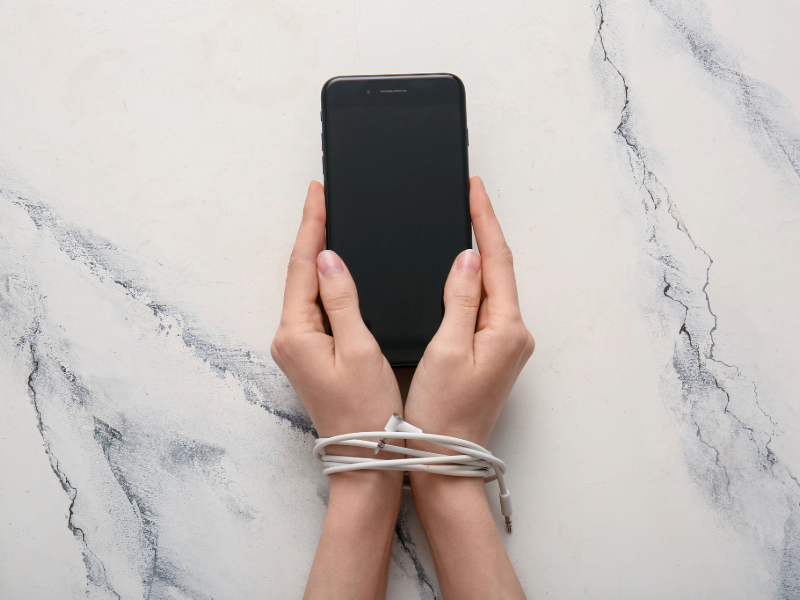
If you’ve ever told your child to “get off the screen” while you were half-checking your phone yourself… you’re not alone. I’ve been there too. We all have.
The truth is, we adults are caught up in it just as much as our kids. Phones have become our comfort blanket, our boredom fix, our brain’s quick little reward. They keep us connected, but they also keep us distracted.
And you know what? Our kids can feel it.
When they run up to us, full of excitement to share something, and our eyes are glued to a glowing screen? They don’t see “Mum’s busy.” They feel, “I’m not as interesting as what’s on that phone.” That hurts to write, but it’s true. And I think that’s where the shift begins. Not with guilt, but with awareness.
So how do we actually break our own screen habits? It’s not about strict rules or beating ourselves up. It’s about small, human changes that help us reclaim attention.
1. Notice your “reach-for-phone” moments
Start with gentle curiosity. When do you tend to pick it up without thinking? Is it boredom? Stress? That tiny lull between tasks?
When you spot your patterns, you create a gap, that second where you can decide differently. Instead of scrolling, try pausing for a breath, a cup of tea, or even a quick cuddle. It’s not dramatic, but that pause is where change lives.
2. Make it harder to mindlessly scroll
If your phone is in your pocket or always beside you, you’ll reach for it. That’s just human nature. So set yourself up to win:
-
Leave your phone in another room when you’re home together.
-
Plug it in to charge away from your bed at night.
-
Turn off the notifications that don’t actually matter (yes, even those group chats).
Your attention is precious, treat it like something worth protecting.
3. Replace screens with real breaks
Sometimes we’re not escaping our kids, we’re just escaping exhaustion. The trick is finding another way to switch off. Go for a quick walk, stretch, play a song you love, or invite your child to help chop veggies for dinner. It doesn’t have to be picture-perfect; it just needs to be real.
Even five minutes of undivided attention gives your child something no app ever can: the sense that they matter most.
4. Make screen rules a family thing
Kids tune out when it feels like “rules for them, not for us.” So whatever limits you set, live them too. No phones at dinner? That includes yours.
You might even make it fun, a weekend challenge to see who can go the longest without picking up their device. Whoever wins chooses the next family movie (and yes, you can all watch it together).
Shared boundaries make it feel like teamwork, not restriction.
5. When you mess up, repair it
You’ll slip up. We all do. The most powerful thing you can do in that moment is own it.
Say, “You’re right, I got distracted. I’m putting it down now, what were you saying?” That small act of repair tells your child they matter more than your screen and teaches them how to admit mistakes with kindness.
A Gentle Reminder
Our kids don’t need perfect parents who never touch a phone. They need parents who notice when they’ve drifted away and come back.
Every time we look up, every time we really listen, every time we put the phone down mid-scroll ,we’re saying, “You matter to me.”
And those little moments add up.
Join the Healthy Digital Childhood Alliance WhatsApp Community